Moebius – Can You Decipher The Pattern?
by stika on Mar.26, 2014, under developer diary, featured, moebius

The art of Moebius uses a distinctive approach, envisioned by Jane Jensen and turned into reality by her global team of artists. The idea was to use a graphic novel style in the narrative. This style was iterated on as Jane and her lead artist discussed how best to approach the final look of the game. These pieces of concept art would then be handed down to the rest of the art team to be interpreted in the engine. In the end, the whole process was a team effort with everyone involved being able to give their input.
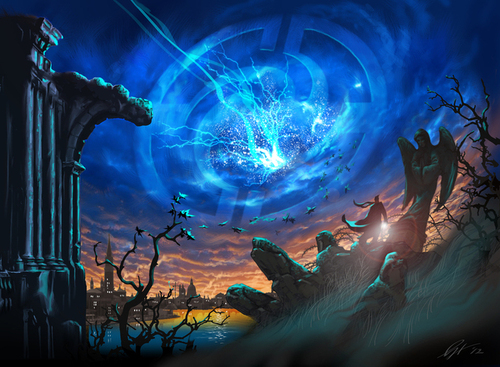
arly concept piece designed during the Kickstarter campaign
Moebius characters were designed with 3D models in order to make the process easier on the art team. In 2D animation each frame needs to be hand-drawn, and that takes time to do. 3D characters are easily reusable instead of having to create all new sprites with individualized animation frames just for a specific set of actions.
Another reason to go 3D over the more traditional 2D approach in adventure games is the ability to quickly create animations as often as possible, which saves time and money. The environments themselves tend to be a mix of 2D and 3D, depending on how they wanted to convey the feeling of the scene.
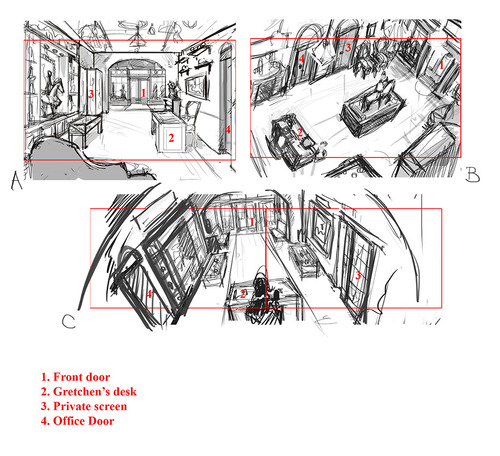
Preliminary sketches for Malachi’s shop
For the environments, sketches are first made of the overall layout of the camera view to get an idea of how the scene should look. Once approved, these sketches are finalized and then sent on to be rendered. 2D artists then polish up the scene with small details, lighting effects, or anything else needed to make it fit into the game world and the art style chosen.
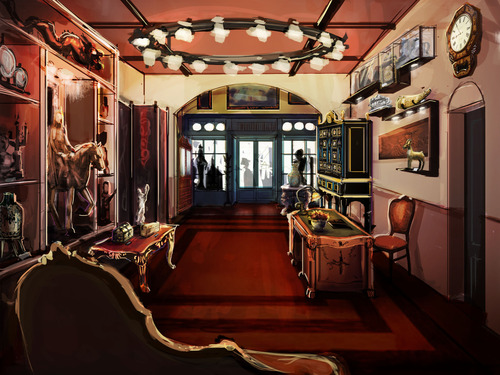
Concept piece for Malachi’s shop before the final render
The way that the characters themselves look were reached after going through the design document and researching these types online as to what would work with what Jane wanted. This research would take about an hour, deciding what elements would work best for that person’s race, age, gender, and how they would dress. Once enough research to get a feel for the character had been achieved, the lead artist would then spend about around another hour or so sketching it out.
Jane would then look the concept over and either approve or critique the piece and have it reworked it based on her feedback. Once approved, the art would then move on to the rest of the team for the final work and implementation in the game itself. Overall, each character would take about a day to flesh out before being sent on.
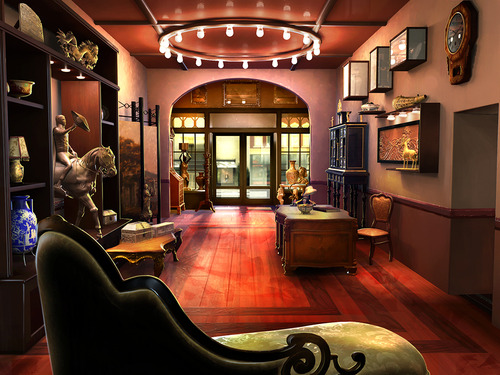
Finalized art for Malachi’s shop
As stated above, the main inspiration for the art direction of Moebius is various graphic novels. In particular, Stephen King’s “The Dark Tower” series as well as DC’s “Batman: Earth One”. While those were the major ones, no particular style was the main focus during the development process.
With the art team spread out all over the world, it sometimes presented a challenge to stay in sync with everyone being in different time zones. As expected, there were times when people had different ideas of how to approach certain problems in putting together the look of Moebius. But for those who play the game they can see that even though it wasn’t always easy to direct so many people from different countries, the style still ends up being a cohesive whole.

Serena Nelson
Social Media Intern
Phoenix Online Studios
-
Developer's Blog Content