cognition
Developer Diary: Music to Our Ears
by Katie Hallahan on Apr.09, 2013, under cognition, developer diary, music
Last May, composer Austin Haynes wrote a guest blog about composing the music of Cognition–music that went on to win the Adventure Gamers’ Aggie Award for Best Music 2012, AND win the Reader’s Choice poll for the same category! So I think it’s safe to say the man knows his music. 😉 Here’s what Austin has to say about composing for Cognition.
If you love Austin’s work as much as we do, head over to the store to download the free soundtrack to The Silver Lining or buy the soundtrack for Cognition!
Hi, I am Austin Haynes, the lead composer for Cognition: An Erica Reed Thriller. I also did the music for The Silver Lining, which was a fan game based off of King’s Quest. When I got involved in Cognition, the first point to discuss was what kind of music would fit the game? I had seen the lovely artwork designs and after discussing with Cesar Bittar, the project director and CEO of Phoenix Online, we both came to the conclusion that electronic elements along with some acoustic instruments would be a good fit. In our discussion, I learned that the game had dark imagery so the textures of synthesizers and otherworldly sounds would fit nicely along with dynamic instruments such as piano and strings. It is dark, mysterious, but also personal and heartfelt too. The setting was clearly different in comparison to The Silver Lining. This would be our first commercial game but as with the rest of Phoenix Online, we welcomed the challenge.
When making the music for the trailer, the visuals were so rich and strong, that it was quite clear in what emotion was needed to capture the moment. It had to be creepy, scary, gritty, and compelling. I used drones and processed sounds to achieve this along with screams I recorded to emphasize the pain and fear these victims were experiencing from these killers surrounded by the city.
There are a few different ways music is used in Cognition. There are some themes used for main characters and also of places that the player may visit quite a bit to make it special and memorable – nothing like music to set the mood. There are cinematic scenes that have to have the music timed and locked in with the visuals. This is very much in the same way that music is scored to film. I like to watch the video and get the sense of timing to start the composing process. This helps me set the pace for the music. Because a lot of changes happen in these videos, the music needs to reflect that so it can be challenging and rewarding at the same time.
Another different use of music is during gameplay. How long will Erica be in certain areas? What is the mood we are looking for here? Because things can change while you are playing and as you progress, we have certain music layers that can come into the mix when needed, making it a very immersive experience. For example, I have some distortion running through large ensemble percussion that comes in as the tension increases during a moment in Episode 1. Being able to have these layers is possible do to the Unity Engine we are using. For intense scenes, distortion was a great way of getting that gritty sound which brought a whole other level of dimension musically to the experience. This is exciting and different from movies that are always locked and set with how everything will go.
There is also the question of implementation. Because a player can spend a long time in a certain area, how long should this music be? Should it be looped or come and go? When it comes to in-game music, I sometimes need to imagine what it is like during early development because the objects, animation, graphics are still being implemented. Most of the time artwork, music examples, or descriptions are provided which gives a good indication of what is needed.
I hope fans of The Silver Lining will like our newest creation and enjoy the music I’ve created! I am excited for everyone to hear the soundtrack and play the game!
GDC Adventure Party: These Things Indeed Go Together!
by Cesar Bittar on Apr.04, 2013, under cognition, developer diary
I often forget how much I really love GDC. Yes, it’s exhausting, yes, by Friday all you want to do is go home and have sometime for yourself. Yes, the driving in and out from San Jose to San Francisco wears you out (Remind me to stay in a hotel in the city at least one day next GDC, I think I said that one last GDC). But, all in all, you get to meet so many interesting people, and rekindle the friendships you’ve made at past conventions. It’s a celebration of all things video games, and because it’s more business oriented than something like E3, it is my kind of place.
This time, Dave Gilbert from Wadjet Eye Games contacted a bunch of us in order to throw a party! It was the first branded “Adventure Game” party, and I wanted to recount a bit of how it went and the great people in it.
Vitek and myself were late to the party because we were stuck in the G.A.N.G Awards, where Cognition’s “The Taking” by Robert and Raleigh Holmes had been nominated for Best Song (Pop) in a Videogame. It was very exciting to see the game get a nomination on a big screen among so many other great songs. Of course, Journey won EVERYTHING (even the stuff it wasn’t nominated for!)
When we arrived the party had already started. The first puzzle: Apparently, even though Dave confirmed twice with the place, somehow GDC rejected our party (we are still scratching our heads about this one) and the booking was off. So we didn’t have a space and we had a bunch of people coming in. How do you fit that many Adventure Gamers in a place taken up by the normal crowd? Easy, you just “Take on the World” a-la Day of the Tentacle. And so, we slowly started to dominate the place. Part of that involved just eating random patrons French Fries. (Oh, you are not in the party? These fries are good, though).

Agustín Cordes and Cesar
We had celebrities! So, the day before Agustin Cordes from Senscape’s Asylum and myself were randomly walking in San Francisco when we bumped into Ron Gilbert (I swear to God I wasn’t stalking him! Maybe). Long story short, we introduced ourselves and felt awkward and so we invited him to the party, and he made it! Which was awesome! I didn’t get much chance to spend with him, but I hope a lot of people came by and said “hi!”
We also had Ragnar Tørnquist in the party. Now, everyone that knows me also knows that I LOVE The Longest Journey and that I was greatly influenced by it when I was
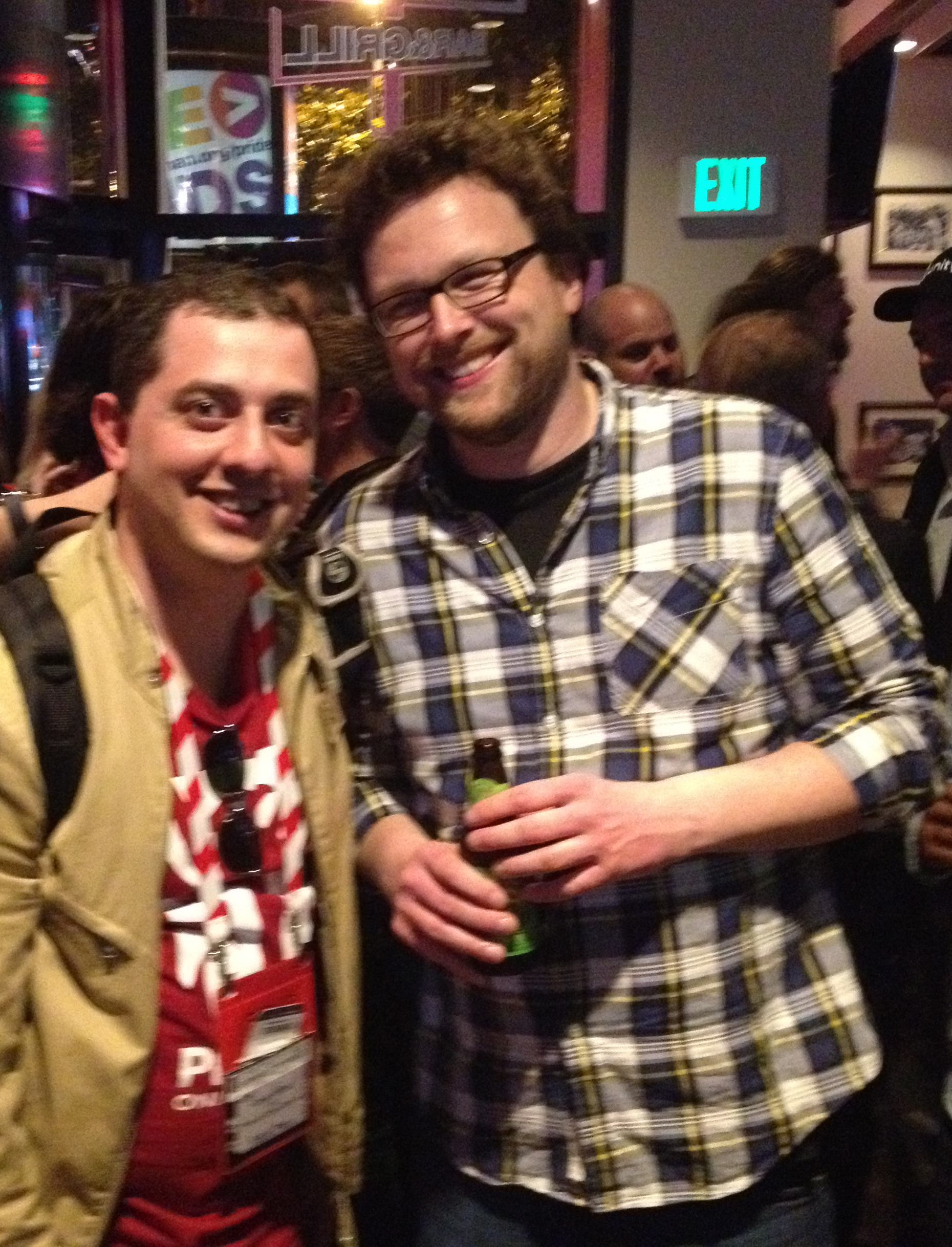
Ragnar Tørnquist and Cesar
writing The Silver Lining. So, my excited self sent an email (or maybe a thousand) to Ragnar a while ago asking if he was going to be at GDC to meet. And out of the blue, the week of GDC, he replied to (one of) the email(s) and asked us to meet over at the Lobby of the W. I have to say I randomly get the chance to meet with such nice developers. Dag Scheve (co-writer of Dreamfall) and Ragnar, are really two of the nicest people I have ever met. Aside from trying to get as many revelations on “Chapters” as possible, we also invited them to the party, and they showed up with all the team that was here for GDC before heading over to the Nordic Party! Ragnar invited me over there, but I had to decline as I was hosting this party. Next time, bud!
I even had the chance to meet some of the people from my own team an the forums. Seeing Kelsey (Rosella from the forums) and Wayne (from our QA team) as well as Gavin (our Production Coordinator) was great. I really felt like part of a big family.
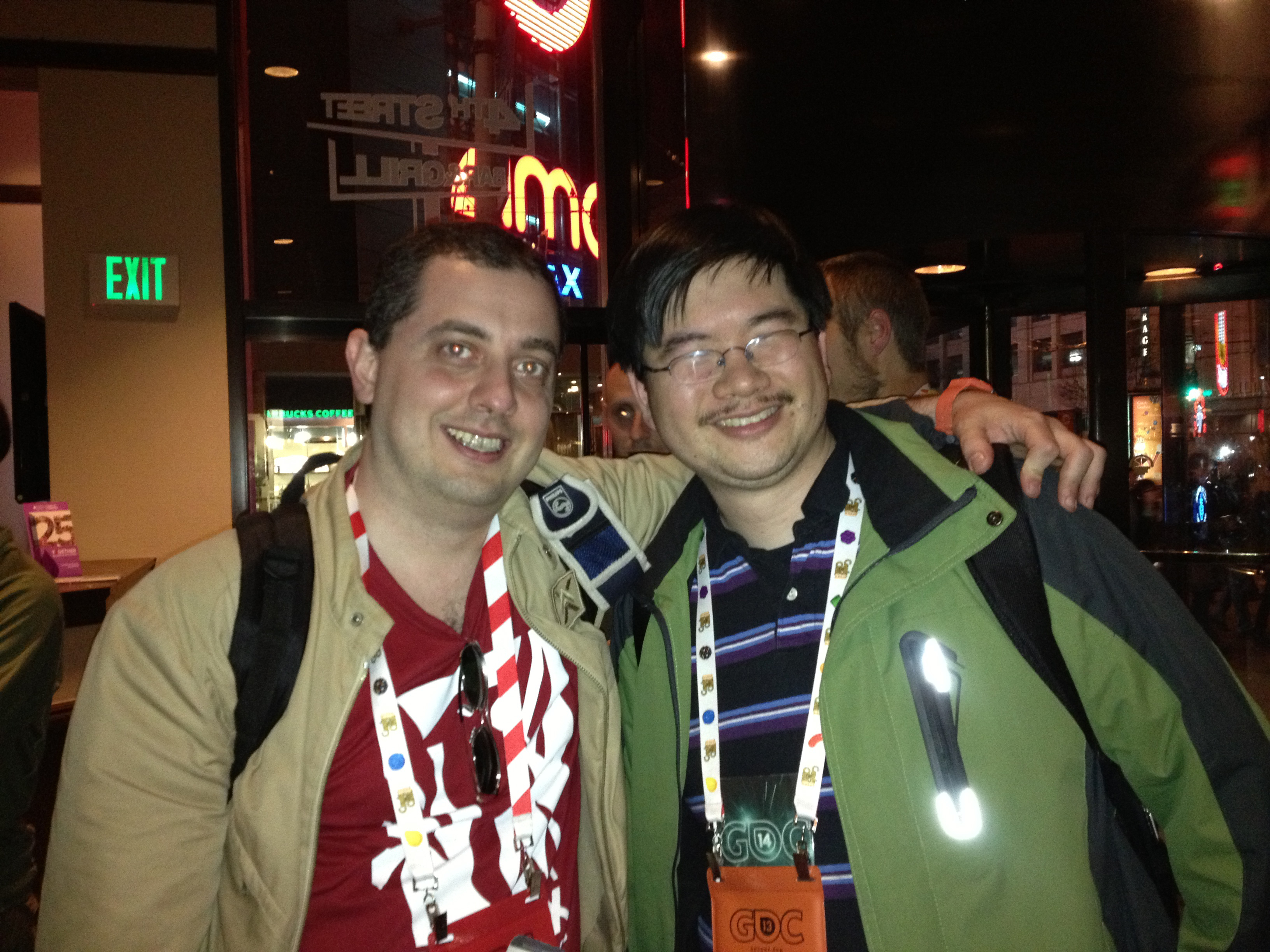
Cesar and Wayne
All in all, it was great to see so many Adventure Game enthusiasts in one place (including the girl who told me she was a big fan of our work and couldn’t wait for Episode 3 of Cognition, Hi!) was a feeling you don’t get too often these days. I call for a repeat for GDC 2014. Bigger, bolder, and with more inventory items.
Thanks to everyone for hosting the party! Wadjet Eye Games, Senscape, Skygoblin, Los Munditos, Irresponsible Games, Grundislav Games, Freebird Games, Floating Hands Studios, Autumn Moon Entertainment, and Emily Morganti!

Kelsey and Cesar
Developer Diary: It’s All Logical
by Katie Hallahan on Mar.29, 2013, under cognition, developer diary
Every game needs logic–and that doesn’t just mean the story and puzzles making sense! Logic, or logic scripting, is a part of the programming in the game engine that tells the game what to do. Logic is how the game knows what interactions are available to the player, and what should happen when they activate those interactions.
For Cognition, Moebius, and TSL Episode 5, we use a visual logic scripting tool in Unity that looks more or less like a flowchart. This is great for people like me, who know nothing about programming, as it’s much easier to follow, work with, and even put together. So no longer does a scripter need intimate knowledge of a programming language to help put the game together!
So, how does it all work? Let’s take an example from Episode 1. Now, as you can clearly see here….
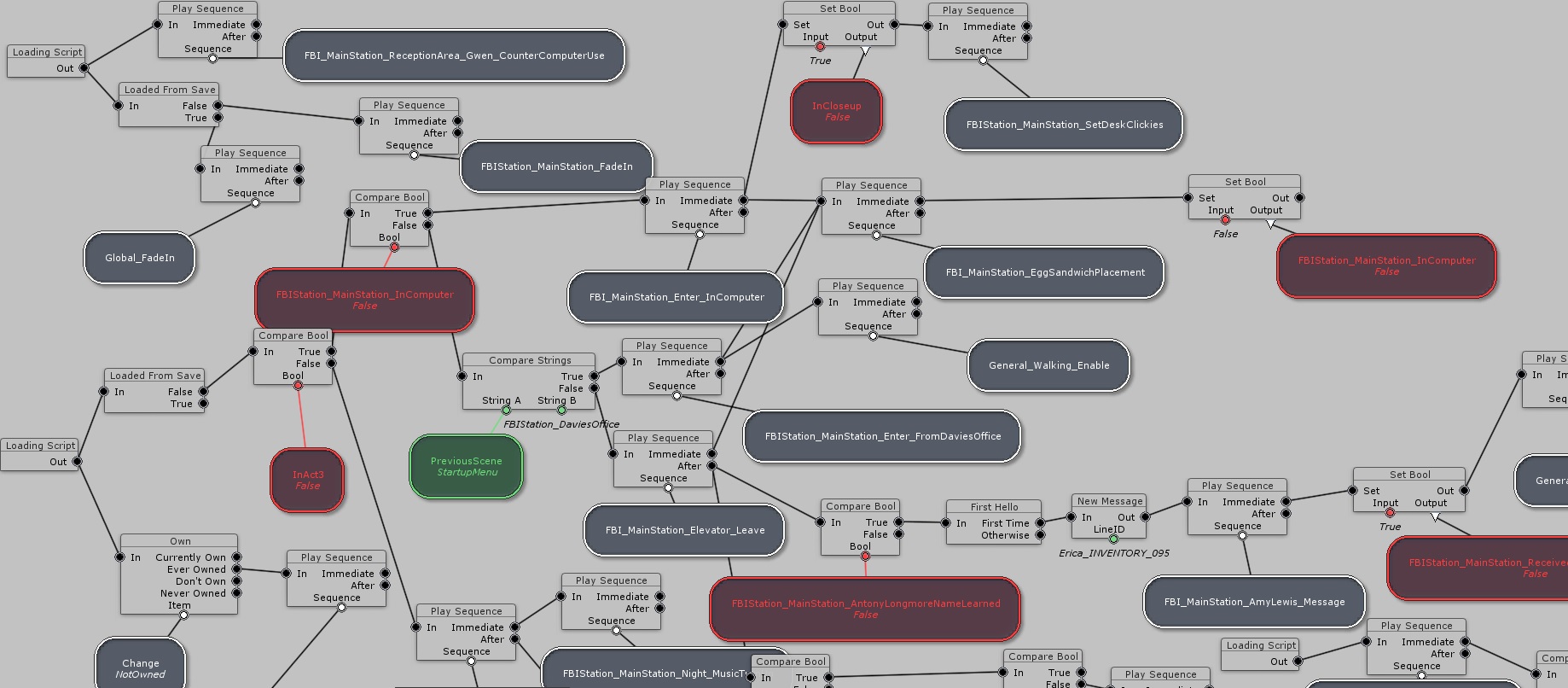
Just kidding. 🙂 That’s a little look at how complicated the logic can get, however, and this is tiny peek at all the things the game looks for when you walk into the FBI Main Station every time!
For real this time, let’s look at something a little simpler. 🙂 Clicking on the image below will make it easier to read and follow along.

These are the interactions for the gate in the opening scene of Episode 1. What we first do is identify for the game what object we’re referring to–the gate–which is done in the scene itself. That purple lozenge labeled “GateDoor_InteractionMesh” is tied to the gate itself. From there, we tell the game to build an action wheel for available actions with the gate. In this case, Erica can Look at the gate, try to Open the gate, and Use her Gun on the gate. When a player clicks on one of these interactions, the game then checks for variables, also called Booleans, with the “Compare Bool” box. In this case, it’s checking whether or not Erica has already shot the padlock on the gate.
If she hasn’t shot it off, then the game gives specific reactions that are defined in the cinematic sequences. If she tries to open the gate, she struggles with the lock and has a conversation with John about it. If she looks at it, she’ll notice that the lock is still there. If she uses her gun, she’ll pull it out and fire a round into the padlock to break it. This action will change the variable, so that the game now knows the lock has been broken and the interactions change. These variables are also called “Booleans”, so “SetBool” is the logic that switches that setting.
At this point, if the player tries to open the gate, Erica will do something different–she’ll remove the chain and padlock, push the gate open, and enter the cemetery. This also changes the scene, something else that is set in the cinematic sequence.
Other actions that are defined here are the hints in Erica’s phone. After Erica tries to open the gate once, she can text her dad for a hint about how to get inside. Once she shoots the lock, that hint is removed (regardless or whether the player has looked at it or not), as she no longer needs it.
These variables are constantly being checked in a game–anytime something changes, like the topics you can talk to someone about, whether a particular location is available yet or not, whether a character is in a scene or if they walk out and leave that scene. This is the logic of the game–and like many things, without logic, it just wouldn’t work!
Developer Diary: PAX East 2013 is Here!
by Katie Hallahan on Mar.22, 2013, under cognition, developer diary
One of the really fun parts of being a game developer is getting to attend gaming conferences and events and call it ‘work’. This weekend is PAX East 2013 here in Boston — gamers of all varieties are coming in from far and wide to celebrate gaming in all its forms in a huge weekend-long convention. How awesome is that?!

Rich & Katie at PAX East 2010
PAX East has a special little place in my heart — not only is the biggest gaming conventions in Boston, but the first time I attended was in 2010. Following the C&D from Activision, PAX EAst 2010 was our big chance to talk to some members of the press about our story, and fellow director Richard Flores and I did exactly that, getting interviews with Kotaku and Joystiq among others that became a part of the momentum that carried us through to working out an agreement with Activision and releasing Episode 1 just a few months later. So from the get-go, for me, PAX East is always linked to promoting and talking about what’s going on with Phoenix Online.
Back in 2010, those were my first in-person interviews, and with the feeling that so much was on the line, I was so nervous I barely slept at all the night before! Thankfully, most of those nerves are long-gone, but the excitement about getting to meet people from the gaming press and getting to talk about what the projects I and so many others love and pour a crazy amount of time and hard work into hasn’t gone away at all!
Plus there’s being surrounded by the whole of gaming culture, distilled into a concentrated dose that you just get to soak in for three days straight. There are awesomely detailed cosplay costumes, line games played with total strangers while waiting for panels, trying out new games in the exhibition hall — there’s just something welcoming and even a little magical knowing you’re standing in a huge convention center with thousands of strangers and you’ve at least one thing in common with every single of one of them.
This year will be another memorable one! I’ll be meeting three of our team members in person for the first time, talking about our current projects–Cognition Episode 3, Jane Jensen’s Moebius, Mad Orange’s Face Noir–fitting in some interesting panels (I’m especially looking forward to this one about story in indie games, featuring Wadjet Eye’s Dave Gilbert), and being a part of this celebration of games, gamers, and gaming culture.

And if you’re interested in keeping up with what I’m up to over the weekend, follow @katiehal16 or @POStudios on Twitter for pictures and more! Going to be at PAX East? You can check out and play Cognition at two booths! Our demo will be at the IndieGameStand booth(#797) and the Indie Royale folks at the Born Ready Games booth (#1121). And say hi if you see one of us around wearing our red Phoenix Online shirts!
Developer Diary: The Voices That Matter
by Cesar Bittar on Mar.19, 2013, under cognition, developer diary

This past Sunday, we wrapped up the recordings for our voice actress for Erica Reed, the extremely talented Raleigh Holmes. After four episodes, I felt a little sad as we wrapped the last few lines of the episode and called it done. For us, we still have to walk this road until we release the episode to all of you, but for Raleigh, today was her last day on the job.
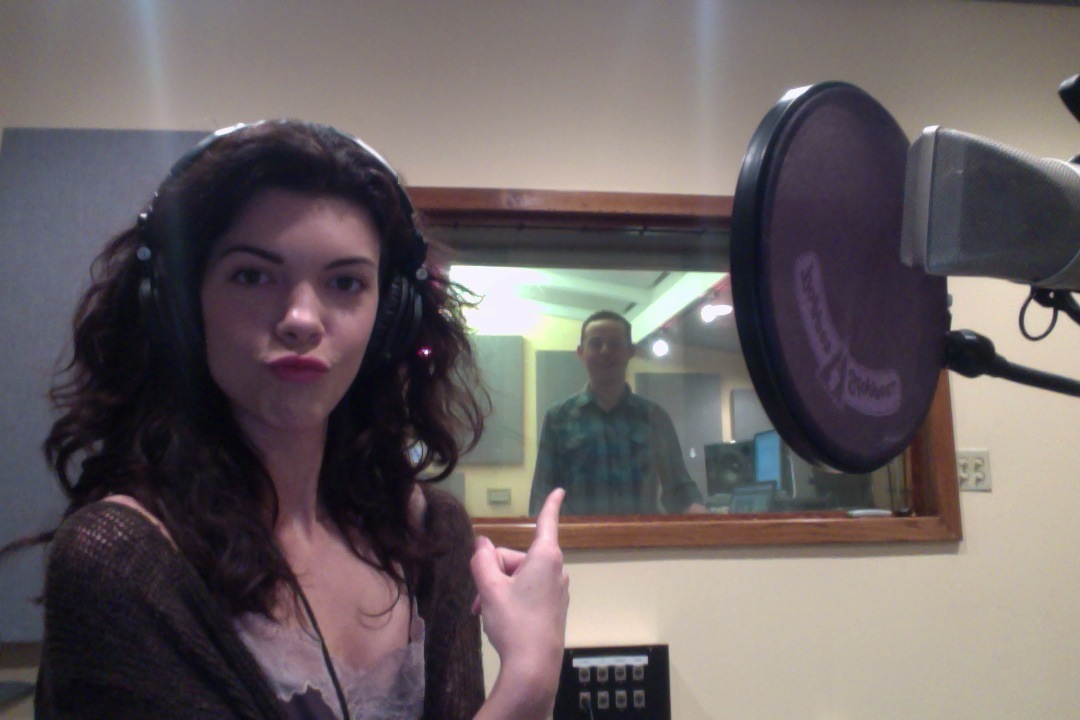
One of the most satisficing aspects about game development for me as a designer is the joy of hearing the lines I wrote take life in someone as talented as Raleigh. Extremely professional and completely dedicated to making things as perfect as possible, in this episode Raleigh just flew through her lines. And although Michael Fortunato, our voice over director, plays a big role in such a great performance, Raleigh was so comfortable by now that you could feel her transformation: She has actually become Erica!

And to bring a character to life through voice overs is not an easy task. Actors normally always have the energy of the stage, the set, or other actors to bounce off from. In voice-overs, they are alone with their microphones in a little booth, and everything happens in their imagination. So kudos to them!
We recorded in two sessions. On Saturday we went through the first two acts and part of act three. We skipped all the sections that would be hard on Raleigh’s voice, such as some of the skin-crawling screams you’ve heard from her in previous episodes, or sections that were so action-oriented they would put a strain on her voice. We saved all of that for Sunday, towards the end of the recording, in case they made Raleigh lose her voice. We have to be very careful in general, as Raleigh’s other passion is singing and she has an upcoming gig at Jane Jensen’s Open House event, so we definitely didn’t want Raleigh to hurt her voice for that! So we took it slow, while Raleigh took sips of her tea to help her keep her voice in check.
Katie joined us as always to make sure Raleigh kept her Bostonian flare. I normally just keep quiet, letting Michael do the direction and sometimes taking over for him when baby Sebastian, his son, needed attention. In those occasions, I would normally ask Raleigh to go to a safer place (such as the inventory lines) because I really prefer Michael to work with Raleigh to get Erica down to the great character we all love. He has such an easy way to get people to read the lines the way they are meant to be written, that I feel nervous that by taking over the more dramatic sessions, we wouldn’t get the best of the best. In those cases, I normally keep to myself unless I feel really strong about how to read a line, or when I need to come in to explain the motivation behind a particular session, behind the character’s thoughts or history that helps the actor understand the characters better. And, sometimes, also as lines are being read, sometimes they don’t feel quite natural once we hear them aloud, so Katie and I are normally there to go over the script and try new lines that feel better for the character or the situation.

To round out the team of people behind the recordings, we had our own Austin Haynes under a different hat, on the technical side, running the recordings in L.A. with Raleigh, and setting everything up so that the rest of us can listen in from our locations in Boston, Montreal, and California. Technology allows us to do this the same way as if we were in the studio with them! Austin especially takes care of things so that the volume doesn’t peak and distort as Raleigh screams or is not too low when she’s whispering, making sure that everything is balanced.
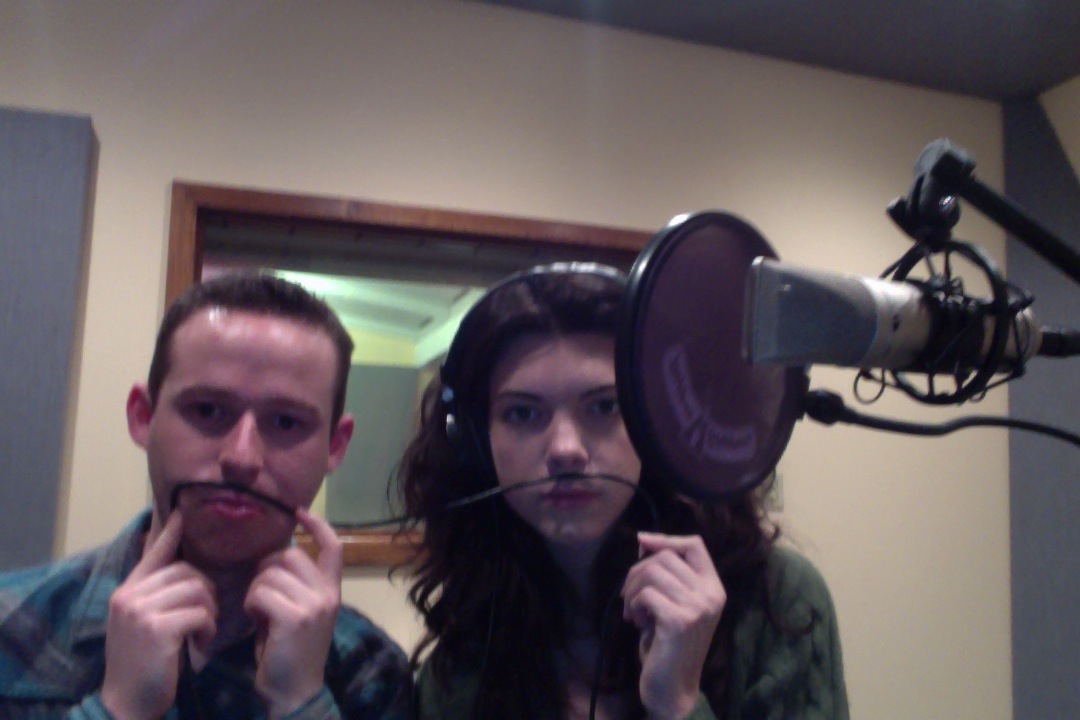
In film, there’s a term called “The Martini Shot” which refers to the last shot done before it’s a wrap . I called it as Raleigh was doing her final screams. I hope (and beg) that we can share many more of those Martini Shots with Raleigh in many productions to come! Talents like hers are rare, and we are very lucky to have her helping make of Erica such a compelling character. Thank you, Raleigh!

Developer Diary: The Cinematic Experience
by Katie Hallahan on Mar.15, 2013, under cognition, developer diary
Chances are good you’ve had a conversation before. But have you ever thought about all the things you do during a conversation? You look at the other person, or sometimes look away. You smile, or nod, or frown and shake your head. Your brow narrows in slightly different ways when you’re upset or confused. You shift your weight. You blink. You react to the what the other person is saying, and they react to you. And then you talk, and you do all those things in addition to speaking. And all the while, the other person is doing those same things, but in their own way.
More complicated than you thought, isn’t it?
While animators make the movements that are seen in the game, putting those animations into the game falls to the Cinematic Artists. These folks have the distinguished, nit-picky, detailed-oriented task of putting together every sequence in the game. What’s a sequence? Everything! Any reaction the game makes beyond simple walking requires a sequence: talking to another character, looking at a specific item, picking something up, using an item, and so forth.
Let’s take a closer look at a brief sequence from Episode 1:
From changing camera angles to Erica crossing her arms to even the timing of Sully walking over in the background, every action, gesture, and audio line is pieced together by a cinematic artist. When John asks, “Do you want to good cop-bad cop him?”, he shrugs his shoulders, his eyebrows raise to indicate he’s asking a question. Erica says no, and shakes her head; at the same time, we see Sully approaching in the background. When we next see Sully, his arms are crossed, and Erica’s have shifted to being on her hips. Later, when Sully is talking about John, he points at him.
All of the gestures are a part of the body language of a conversation, and each one is specifically chosen and timed to make the conversation feel close to real life. Even the blinks and eye movements are specific! While these are most often assigned a routine animation that will have the character blink automatically, the place they’re looking is an assigned value. Notice how John looks in Sully’s direction when he joins the conversation–that shift in where John is looking and when is something the cinematic artist tells the game to do.
The camera angles, too, change to indicate who’s speaking, to show their reactions, to keep the pace of the conversation interesting, rather than relying on a single group camera for the entire time. These changing camera angles mimic the kind of camera work you would see in a movie — that’s why it’s called a “cinematic sequence.”
Just like we do for the animations, we have meetings where we review the cinematics each week, going through each and every sequence in the game, offering feedback to revise and perfect each of them. If I know that during a particular line of dialogue, Erica is meant to be acting aggressively, I’ll give that note to the cinematic artist so they can reflect this in her body language. If another person is hiding information, we may ask for them to be reluctant to make eye connect, something people often do in real life when they’re lying. Being a cinematic artist requires a LOT of attention to detail and putting up with the nit-pickiest feedback from the director you can imagine! And the end result adds to feeling of a character’s depth by giving what was a 3D model personality and physical character traits and quirks that the player recognizes and takes in just like they do in real-life conversations.
And sometimes, we find fun glitches like this!
Developer Diary: All About Animation
by Katie Hallahan on Mar.12, 2013, under cognition, developer diary
The way a person moves, stands, and talks is part of who they are. It can be an essential part of making observations and judgments about their character–in fact, doing just that is a trick actors have been using for centuries! That’s why animations are such an important part of a video game like Cognition.
Not being an animator myself, when I stepped into directing Episode 2, I was surprised by how much I had never thought about in terms of animations. Every single unique movement that a character makes has to be animated through several stages of revision. Picking up a pen might seem like a simple thing, but it’s not. You’ve probably never thought about just how many parts of your body move when you pick up that pen: your head turns over and down to look at it. Your arm reaches out, and chances are your back bends towards it as well. Your fingers–all five of them, don’t forget–move as you open your hand and then close them around the object. You’ve got the pen! Congratulations. Now move all those parts of your body back into exactly the same position they were in before, plus one pen poised for use.
Oh, did you want to use that pen, too? Well, roll up your sleeves, folks, we’re gonna be here for a while!
Being a part of the daily animation meetings, I quickly appreciated just how much detailed work our animators do, and I also saw as they got better and better over time. Someone might forget to animate the spine for one animation, but the next time around they’d remember to incorporate that into their work. I also learned about the stages of an animation as it progresses. Below are two of the earlier passes on a much more complex action, where Erica jumps out of the way of a speeding car, done by animator Dan Long:
This video shows the blocking pass–in this early stage, the animation is “blocked out” into its main, basic components.
Here you can see a more polished version of the animation. After blocking, details are added into the animation. From here, the animation is polished until it’s approved as final, and then added to the game. Where we may discover it’s so final after all and send it back for more polish!
These are only 2 passes, but it gives you an idea for how much detail and work goes into animations. After sitting in on these meetings for just a few weeks, I had a new appreciation for custom animations–even in older games! Next time you’re playing a game, take a moment to think about all the tiny moving details of every character, every aspect of the game, and just how much work someone put into an animation that lasts only a few seconds on your screen!
Developer Diary: The Design Process
by Katie Hallahan on Mar.08, 2013, under cognition, developer diary
We recently got this question over at the Cognition Steam Community Group: “Where do you get your ideas?” And that’s as good a place as any to start talking about the process of developing a game! With due warning, there are some very mild spoilers for Episode 2 in here–nothing the trails don’t already hint at or say, and nothing you don’t find in the first chunk of gameplay. I wouldn’t ever spoil the big moments!
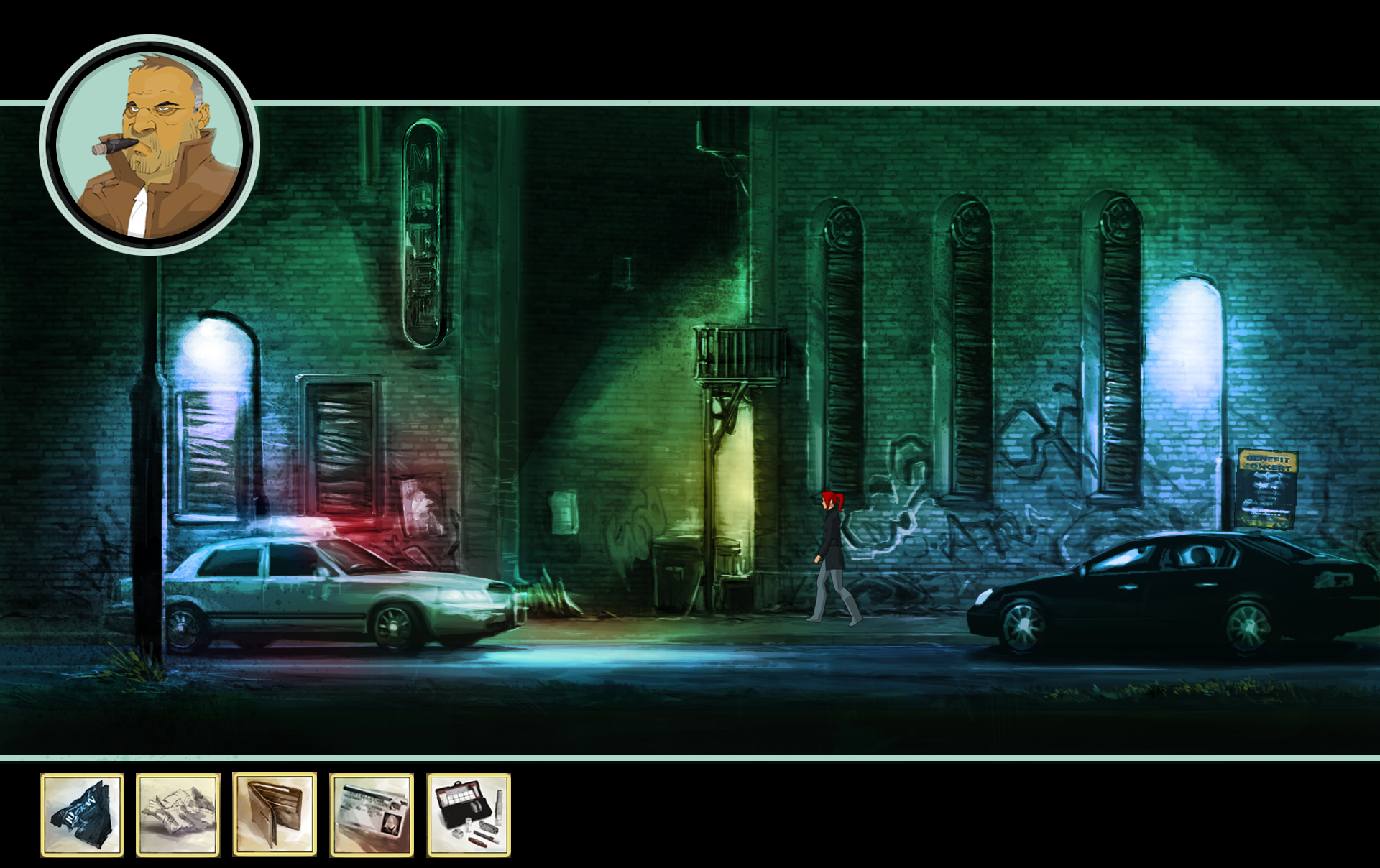
One of the original scenes done by Romano; this was eventually adapted into Robert's Alleyway
For Cognition, when we started creating the plot, we had some gorgeous art from Romano Molenaar to go from, and we knew that Erica Reed was in law enforcement. Apart from that, however, the world was our oyster. The artwork has a fantastic noir feeling to it from the get-go, and as soon as we saw it, Cesar and I were primed for a creepy, moody thriller. And admittedly, after nine years of working The Silver Lining, we were overdue for something more “adult”!
We started by refining what we had–we went with her as an FBI Agent instead of a cop, since we figured that was done less often. We set the game in Boston instead of New York, for another change of pace from the usual (and t my delight, being a Boston native). Then we began throwing out ideas that quickly became refined: she was hunting down a serial killer–or maybe several. What kind of pattern would there be to the kills? What did that say about the killer, what was their motivation, their psychology behind this? Did we want to keep it entirely grounded in reality, or did we want to add a paranormal twist by giving her some kind of ability? An earlier version had a number of killings based on Shakespeare in addition to Erica’s post-cognition ability, but the Shakespeare idea we discarded thanks to some sage advice from Jane to pick one of the two themes and focus in on that.

Strong-willed leading ladies
What kind of person would Erica be? We each had our inspirations for her; you can read about Cesar’s here. Some of my inspirations included characters like Buffy Summers and Veronica Mars. Both strong young women, in very different ways, with strengths, flaws, and events that traumatically change their lives. But something you don’t get to see from either of them, simply due to the nature of TV shows coming and going, is how their lives play out years after the fact, out in the “real world.” Erica is in her early 30s, rather than her teens or early 20s. I wondered how something like her not-quite-controlled power would affect her in the long term.
Once we had the overarching plot laid out, it was time to breakdown the episodes and flesh them out. Each one focuses on a particular serial killer Erica is tracking, and delves into the background of who this killer is, why they do what they do, and from there, we build up the steps she takes to find them, the trail of clues left behind. For the Wise Monkey, I was working with a killer who had focused on the eyes, ears, and tongues of their victims, and I thought about why someone would do something like this. I was also interested in changing things up (again, notice a pattern here?) by having Erica pursue a female serial killer, so I researched what makes female killers different from their male counterparts.
As you can imagine, we did some rather grisly research for this game.
With the main characters (or at least, personalities) settling into place, it’s time to examine what kind of rooms and side characters fit into the story. I’d decided to make the Wise Monkey’s victims people with musical talents in connection with what was being done to them, and with Boston as the setting, the next natural step was to make some connections to Berklee College of Music (and I must emphasize that apart from its existence as a music-focused college, everything else about it is completely fictional in Cognition!). The characters were fleshed out, with their personalities and connections coming from both what felt natural to the plot, and thinking about what kinds of twists I wanted to add both to this story, and to the overarching plot. Sometimes this will include coming up with an idea and dismising it–because it’s not much fun if the solution to all problems is the very first thing you think of!
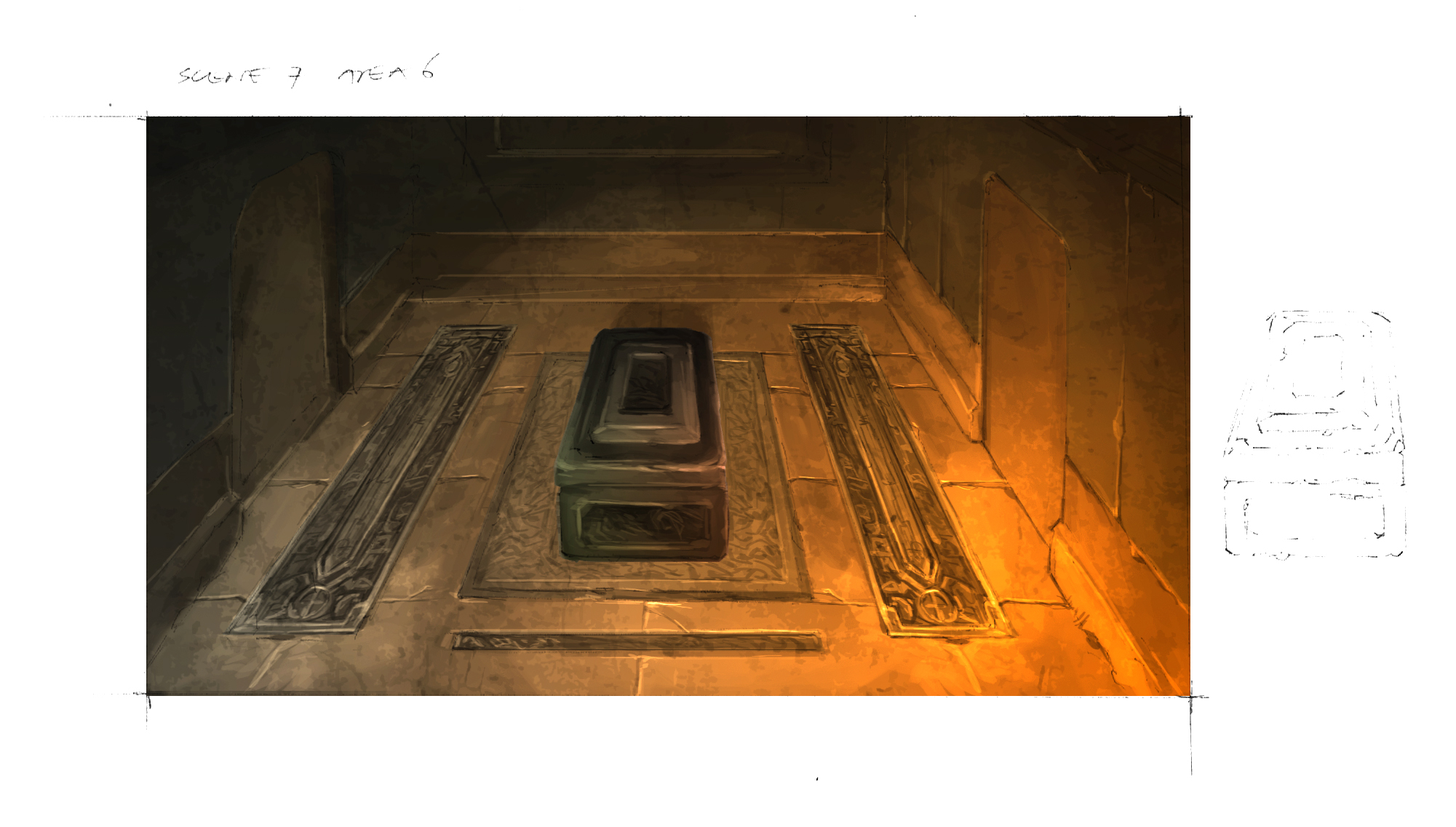
Another of Romano's original works, this was used in the prequel comic, "Provenance"
Then, finally, I focus on the puzzles. Some puzzles emerge in the process of fleshing out everything else, but this is where the nitty gritty details happen. For this episode, we were planning on introducing a new power for Erica, so incorporating that power into a good amount of the puzzles was important; as well as making use of the powers players were already familiar with. What I really like about this is that we can make puzzles that aren’t just about what you see, but you could see–leading people to make connections between objects on screen, in their inventory, and between people they encounter as well. At the same time, Erica’s visions are rarely a solution or a full answer to what’s going on, so it’s a constant task of leaving breadcrumbs to lead the player to the final stages of the Episode.
And that final stage….hoo boy. I won’t spoil that here, but suffice to say I wanted to make it challenging on a number of levels, incorporate a lot of the Cognition-specific gameplay, and really make a memorable final moment for Episode 2.
So that’s the quick overview of the steps of the design process. From one point to the next, the ideas we build on often inspire what comes next, and connections spring to life as you go. It’s an exciting moment whenever I get a flash of inspiration that ties everything together, and I crack open a Word doc or grab a notebook to get it all down. I’ve got about 5 pages of notes at least from a brainstorming session with Cesar during GDC last year, and those are especially fun since we’re an online company, when we’re able to get together in person and dive into the creative process together.
Developer Diary: Start at the Beginning
by Katie Hallahan on Mar.05, 2013, under cognition, developer diary
The best way for me to talk about my development experience is to start with beginning, which for me is just a little over a year ago. Talk about the year that changed everything!
I’ve noticed that one of the surest validations that a change in your life is for the best is when your friends and family tell you congratulations for the most unusual things. So for me, when I was laid off from my previous full time job on Friday Febraury 17, 2012, that along with a feeling of relief and excitement made it clear that this was one of the best things to ever happen to me. Everyone I talked to while I waited for my bus home knew better than to say “I’m sorry” or sympathize or tell me I’d find something else soon. They all said the exact same thing: “Oh…well, now you can work full time on what you really want to do!”
I got home and signed onto Skype (where we have our “virtual office”), just in time for our daily Skype meeting to hear another round of congratulations from the team. There were even some jokes that I had Erica’s cognition powers because I’d been having recurring dreams of being laid off and jumping into full time Phoenix Online work! And with that, we dove into our daily updates. And it was so exciting! I’d known these meetings happened daily, but I’d not been able to attend one before now. It was immediately clear how different an experience it was going to be working full time on Cognition versus the part time experience I’d had up until then of only being online and working at night and on the weekends.
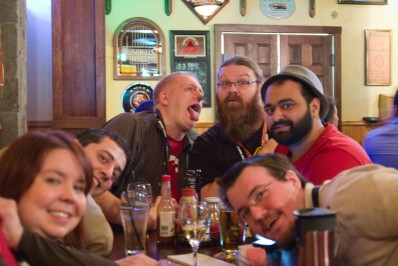
Who wouldn't love working with these clowns everyday? 🙂
I spent that day mostly figuring out what the flow of things was going to be and getting my home office in order now that it was where I was going to be spending my days. Within a week, I had plane tickets to San Francisco purchased and I was arranging press interviews, swag designs, and poster artwork for our booth at GDC Play. And in the first week of March, I took my first ever business trip to attend a convention as an exhibitor. I met our CFO Weldon, and two of our animators (Dan & Tracy) for the first time in person! I saw Cesar and Vitek for the first time since our trip to Jane Jensen’s farm the previous March; it had been years since I’d seen Michael, our voice over director, and Aaron, our lead programmer. It was a thrilling, whirlwind, exhausting experience that I may address in more detail in a later Dev Diary post. But it was the start of finally really feeling like I was a video game developer.
Developer Diary: Teaming Up With Jane Jensen
by Katie Hallahan on Mar.01, 2013, under cognition, developer diary
A question we often get is how we ended up teaming up with Jane Jensen on Cognition. Cesar has told the story how some of the directors first met Jane and Bob when they generously invited us to visit them at their beautiful farm, but what happened between then and the announcement of the Cognition Kickstarter?
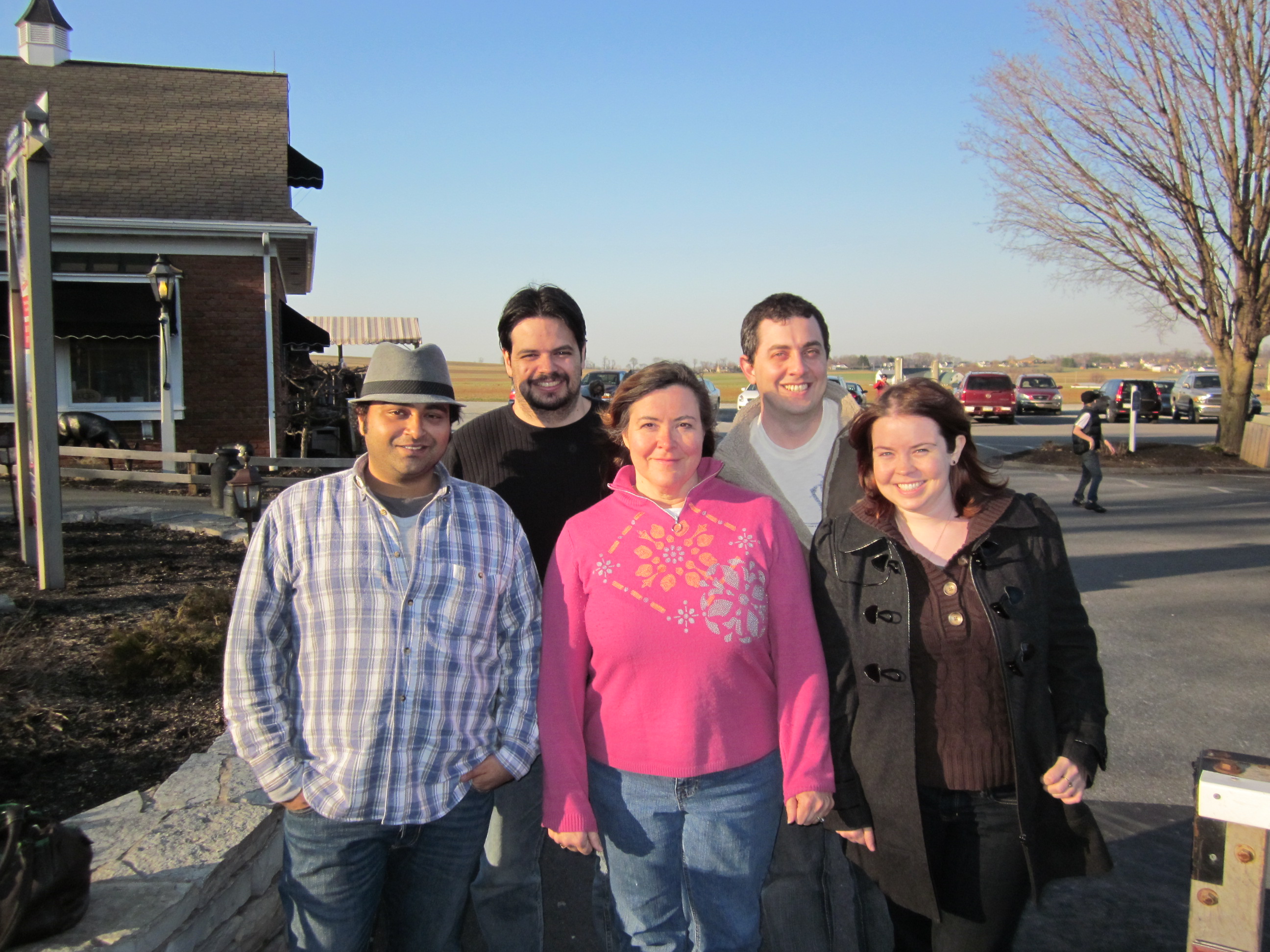
Vitek, Rich, Jane, Cesar, and Katie
When we first met with Jane in March 2011, we talked a lot about our plans for Phoenix Online’s future, and naturally the possibility of working together was part of those discussions. At the time, there wasn’t anything that fit what we were looking for, but when Cognition came up that summer, asking Jane if she was interested in working with us was one of the first thoughts we had! The timing and position of Story Consultant worked out perfectly for both her and us, and we got to work.
As Story Consultant, Jane reviews all of our design work, from feedback on the outlines to a full editing pass on the script, and her input has been helpful from day one in helping us to keep the game focused. When Cesar and I were originally outlining the game, we were considering two main plot arcs: the first was Erica’s powers, and the second was a series of killings with a Shakespearean theme. (We’ve got a habit of trying to do too much. We were once naively proud of the original full script for TSL being about 1500 pages long!) Jane’s suggestion that we stick to just one lead us to focus on Erica’s powers, the theme that we could potentially build a series on; maybe someday she’ll face that Shakespearean killer yet!

Things Erica can't do with her bare hands has become a favorite reference and joke of ours--turns out it started with Jane!
For me personally, one of the best pieces of writing advice I’ve learned from Jane is that every scene, character, and puzzle needs to support your story. Don’t waste any time — yours or the players — with things that don’t support that development.
It’s been wonderful having her help on Cognition, and we’re highly enjoying working with her in a different capacity on Moebius — but the details of that will be for a future blog from Cesar!
-
Developer's Blog Content